

24/7
Emergency breakdown repairs
20+
Years as an Atlas Copco distributor
3
Regional depots across the region
Heat recovery
What Is Heat Recovery for Air Compressors?
Almost all of the electricity an air compressor consumes is converted into heat. In fact, around 94% of the input energy becomes thermal energy. Without a recovery system, this heat is simply lost to the atmosphere.
A heat recovery system captures this otherwise wasted energy and puts it to work, typically for space heating or process hot water. The result is lower gas consumption, reduced energy costs, and a measurable reduction in carbon emissions.
Heat recovery intercepts waste heat from the compressor’s cooling circuit. Standard oil-injected rotary screw compressors distribute electrical energy as follows:
An energy recovery unit typically captures 70–75% of input power as useful heat. It produces hot water while simultaneously generating compressed air.
Standard oil-injected rotary screw compressors
- 76% transfers to the oil cooling circuit
- 4% remains in the compressed air
- 2% radiates from the compressor canopy
- 18% dissipates through aftercooler and motor losses
How Do Heat Recovery Systems Work?
There are two primary architectures for recovering waste heat.
01
Air-Cooled Systems (Ducted Air)
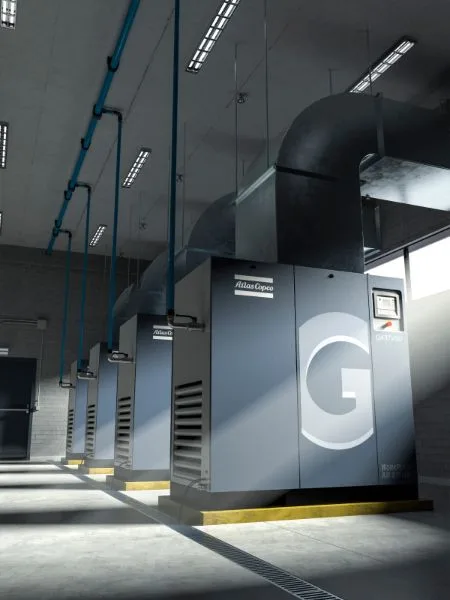
This method redirects hot cooling air into a workspace. Engineering Note: Airflow must be balanced. High back-pressure causes fan stall and compressor overheating.
- Galvanised ducting channels exhaust air into warehouses or workshops
- Exhaust air is typically 15–40°C above ambient temperature
- Dampers allow heat venting to the outdoors in summer
- Cost-effective solution for space heating
02
Water-Cooled Systems (Hydronic)
This is the most efficient recovery method.
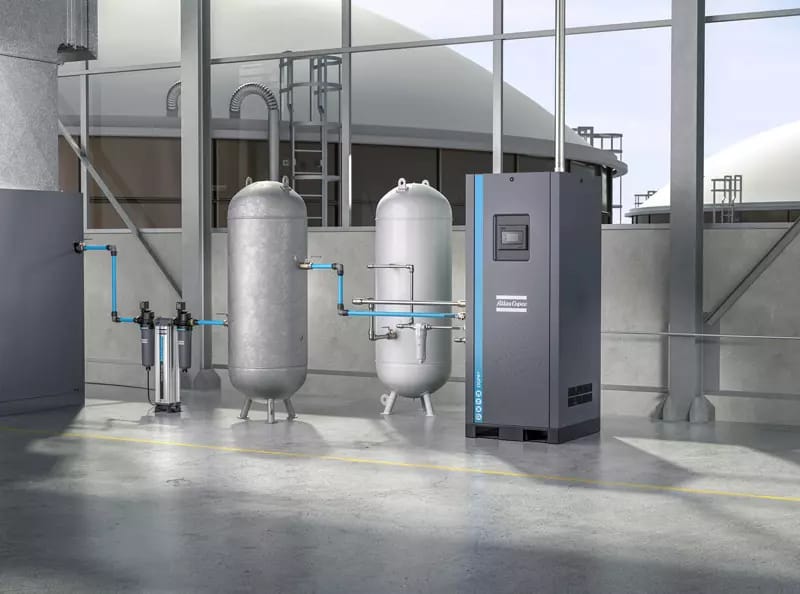
- Uses a heat exchanger to transfer heat from oil to water
- Produces hot water between 70°C and 90°C
- Delivers year-round financial returns
- Not affected by seasonal temperature changes
03
Exchanger Types
- Brazed Plate Heat Exchangers (BPHE): Standard applications.
- Shell-and-Tube: Grey water or hard water applications. Allows mechanical cleaning.
Financial Benefits and ROI
Heat recovery provides a rapid return on investment. Payback is often under 12 months. Savings depend on site load and water-return temperature.
Based on a 100 kW oil-injected compressor running 6,000 hours per year:
Calculation Example
- Total Energy Use: 600,000 kWh per year
- Recoverable Heat: ~450,000 kWh per year
- Gas Savings: ~£31,700 per year (displacing natural gas)
- Payback: ~7 months (based on typical retrofit cost)
UK Tax Incentives
Investment in Energy Recovery for Air Compressors qualifies for UK fiscal incentives.

Full Expensing
100% first-year allowance. Reduces corporation tax by 25p per £1 invested.

Annual Investment Allowance (AIA)
100% tax relief on plant and machinery up to £1 million.
UK Compliance and Reporting
Heat recovery supports compliance with UK energy regulations.
UK Compliance and Reporting
- SECR: Recovered energy reduces reported consumption.
- ESOS: Frequently recommended as a Phase 3 measure.
- ISO 50001: SMARTLINK data validates energy management improvements.
- Building Regulations Part L: Encourages use of waste heat in commercial buildings.
Where Can Recovered Heat Be Used?
Direct recovered heat to high-demand applications to maximise ROI.
01
Boiler Return Pre-heating
Reduces boiler firing rate and fuel use.
02
Process Heating
Clean-in-Place (CIP) systems and bottle washing.
03
Industrial Cleaning
Phosphate baths and parts washers (60–70°C).
04
Paint Lines
Pre-heating air for curing tunnels.
05
Space Heating
Radiators or radiant panels in logistics hubs.
06
University Facilities
Constant hot water demand for laboratories and research.
Atlas Copco Integrated Solutions vs. Retrofits
Search Air implements solutions on any industrial rotary screw compressor.
We supply machines with factory-integrated recovery systems.
Atlas Copco Integrated Solutions
- GA VSD+ Series: Stack Variable Speed Drive (VSD) savings with heat recovery.
- Z-Series (Oil-Free): Connect multiple units to ER 90–900 cabinets. Generates 90°C water.
- SMARTLINK: Tracks exact energy saved for reporting.
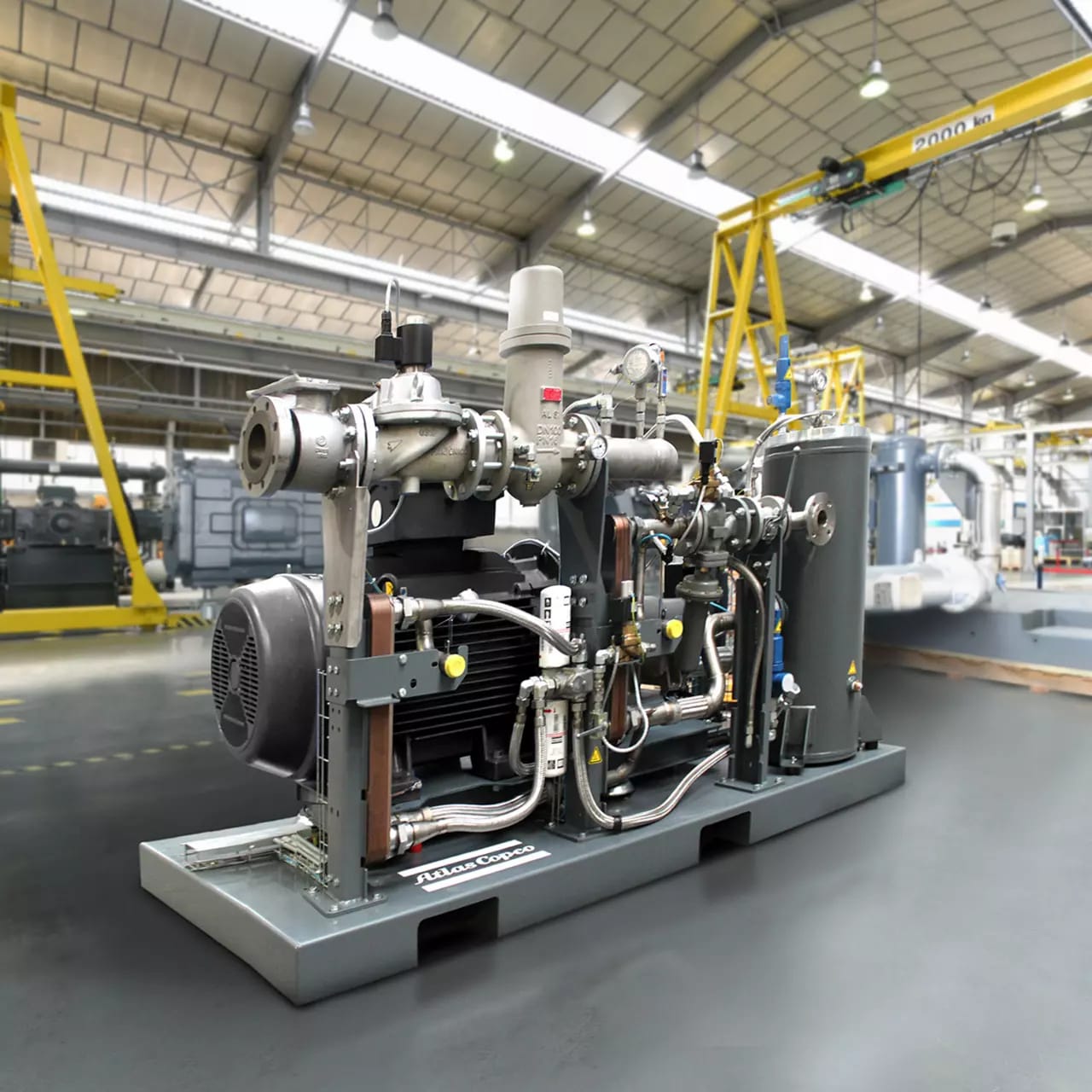
Universal Retrofit Capability
We retrofit heat recovery boxes to mixed fleets.

Compatible with Kaeser, Ingersoll Rand, CompAir, and HPC.

Maintains warranty when installed per OEM guidelines.

Shell-and-tube options available for poor water quality.
Maintenance and Installation Requirements
System integration requires professional engineering.
Thermostatic Control. A Thermostatic Control Valve (TCV) is essential. It regulates oil flow. It ensures the compressor reaches optimal operating temperature. Over-cooled oil (below 60–70°C) causes moisture condensation. This leads to bearing failure. The TCV prevents this.
Water Quality and Limescale. Hard water regions (Yorkshire and East Midlands) cause scaling. Limescale reduces heat transfer efficiency. Use water treatment or cleanable shell-and-tube exchangers.
Routine Inspections. Regular checks ensure ongoing savings.
Routine Inspections
- Check water inlet and outlet temperatures monthly
- Monitor compressor oil discharge temperatures
- Inspect pump seals and strainer baskets

Sizing and Feasibility
Performance depends on duty cycle and load profile. Accurate sizing requires data. A Compressed Air Energy Audit or #airCHECK models these values. Loggers predict recoverable energy before capital commitment.
Summary: Long-Term Value of Heat Recovery
Heat recovery lowers gas consumption. It reduces carbon emissions. It provides a measurable return within months. Search Air supplies complete system design, installation, and maintenance across Leeds, Sheffield, and Nottingham.
Professional Servicing Available
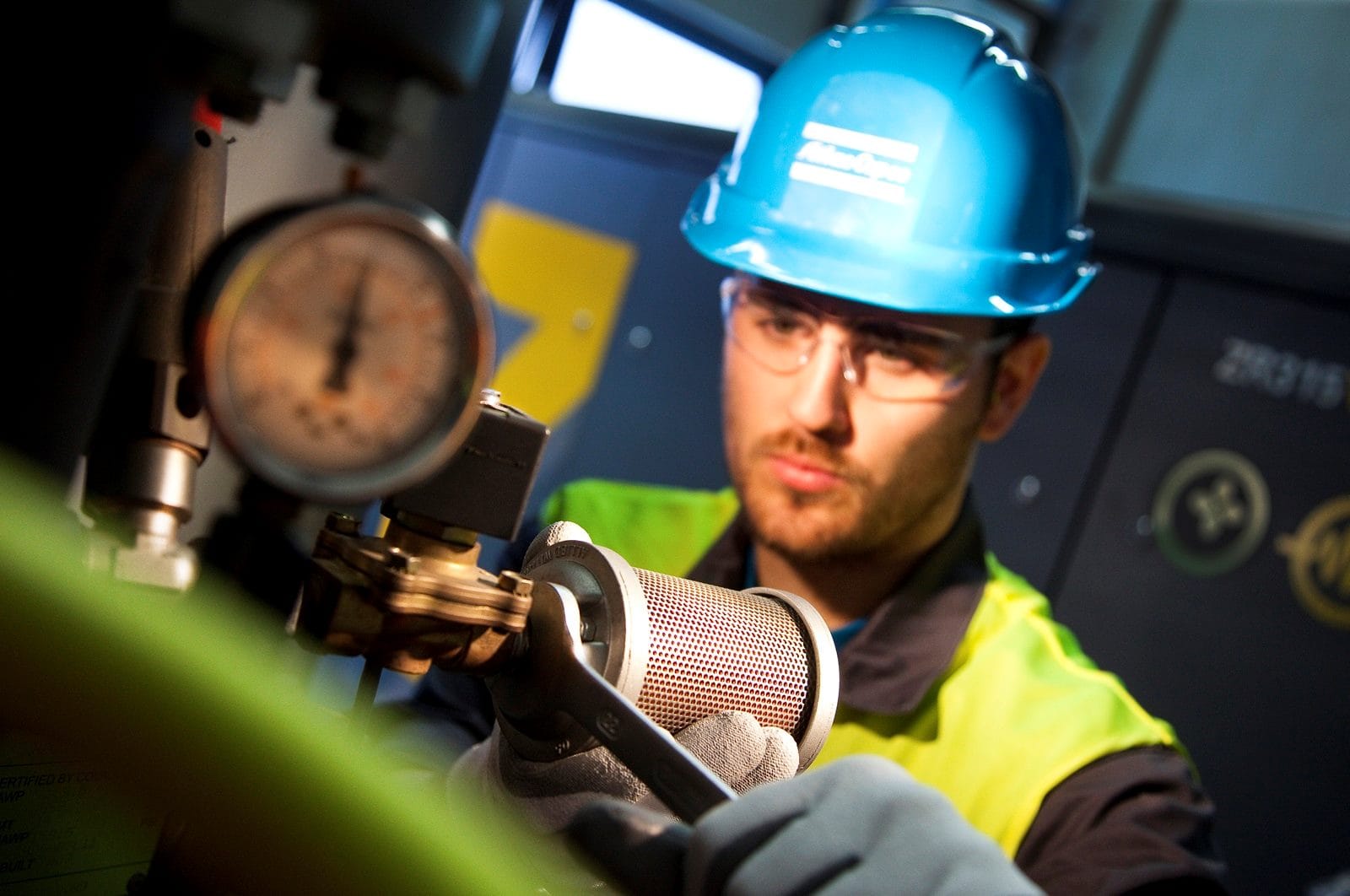
Our Atlas Copco trained technicians provide comprehensive maintenance and repairs for all major compressor brands. With depots in Leeds, Nottingham, and Sheffield, we’re never far away.
Take the Next Step
Determine your exact savings. Book a Compressed Air Energy Audit or request a free #airCHECK.