
Services
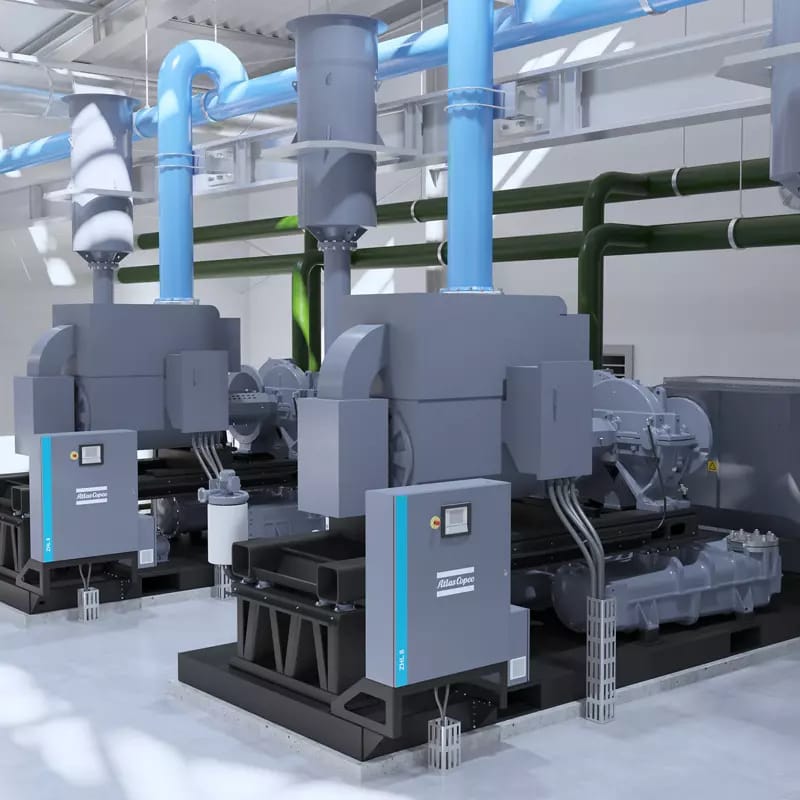
Heat Recovery for Air Compressors
Search Air supports sites across Leeds, Sheffield, and Nottingham with heat recovery installation and servicing.
Almost all of the electricity an air compressor consumes is converted into heat. In fact, around 94% of the input energy becomes thermal energy. Without a recovery system, this heat is simply lost to the atmosphere.
A heat recovery system captures this otherwise wasted energy and puts it to work, typically for space heating or process hot water. The result is lower gas consumption, reduced energy costs, and a measurable reduction in carbon emissions.
What Is Heat Recovery for Air Compressors?
Heat recovery intercepts waste heat from the compressor’s cooling circuit. Standard oil-injected rotary screw compressors distribute electrical energy as follows:
- 76% transfers to the oil cooling circuit
- 4% remains in the compressed air
- 2% radiates from the compressor canopy
- 18% dissipates through aftercooler and motor losses
An energy recovery unit typically captures 70–75% of input power as useful heat. It produces hot water while simultaneously generating compressed air.
How Do Heat Recovery Systems Work?
There are two primary architectures for recovering waste heat.
Air-Cooled Systems (Ducted Air)
This method redirects hot cooling air into a workspace.
- Galvanised ducting channels exhaust air into warehouses or workshops
- Exhaust air is typically 15–40°C above ambient temperature
- Dampers allow heat venting to the outdoors in summer
- Cost-effective solution for space heating
Engineering Note: Airflow must be balanced. High back-pressure causes fan stall and compressor overheating.
Water-Cooled Systems (Hydronic)
This is the most efficient recovery method.
- Uses a heat exchanger to transfer heat from oil to water
- Produces hot water between 70°C and 90°C
- Delivers year-round financial returns
- Not affected by seasonal temperature changes
Exchanger Types:
- Brazed Plate Heat Exchangers (BPHE): Standard applications.
- Shell-and-Tube: Grey water or hard water applications. Allows mechanical cleaning.
Financial Benefits and ROI
Heat recovery provides a rapid return on investment. Payback is often under 12 months. Savings depend on site load and water-return temperature.
Calculation Example
Based on a 100 kW oil-injected compressor running 6,000 hours per year:
- Total Energy Use: 600,000 kWh per year
- Recoverable Heat: ~450,000 kWh per year
- Gas Savings: ~£31,700 per year (displacing natural gas)
- Payback: ~7 months (based on typical retrofit cost)
UK Tax Incentives
Investment in Energy Recovery for Air Compressors qualifies for UK fiscal incentives.
- Full Expensing: 100% first-year allowance. Reduces corporation tax by 25p per £1 invested.
- Annual Investment Allowance (AIA): 100% tax relief on plant and machinery up to £1 million.
UK Compliance and Reporting
Heat recovery supports compliance with UK energy regulations.
- SECR: Recovered energy reduces reported consumption.
- ESOS: Frequently recommended as a Phase 3 measure.
- ISO 50001: SMARTLINK data validates energy management improvements.
- Building Regulations Part L: Encourages use of waste heat in commercial buildings.
Where Can Recovered Heat Be Used?
Direct recovered heat to high-demand applications to maximise ROI.
- Boiler Return Pre-heating: Reduces boiler firing rate and fuel use.
- Process Heating: Clean-in-Place (CIP) systems and bottle washing.
- Industrial Cleaning: Phosphate baths and parts washers (60–70°C).
- Paint Lines: Pre-heating air for curing tunnels.
- Space Heating: Radiators or radiant panels in logistics hubs.
- University Facilities: Constant hot water demand for laboratories and research.

Professional Servicing Available
Our Atlas Copco trained technicians provide comprehensive maintenance and repairs for all major compressor brands. With depots in Leeds, Nottingham, and Sheffield, we’re never far away.
-
Professional Servicing Available
Atlas Copco Integrated Solutions vs. Retrofits
Search Air implements solutions on any industrial rotary screw compressor.
Atlas Copco Integrated Solutions
We supply machines with factory-integrated recovery systems.
- GA VSD+ Series: Stack Variable Speed Drive (VSD) savings with heat recovery.
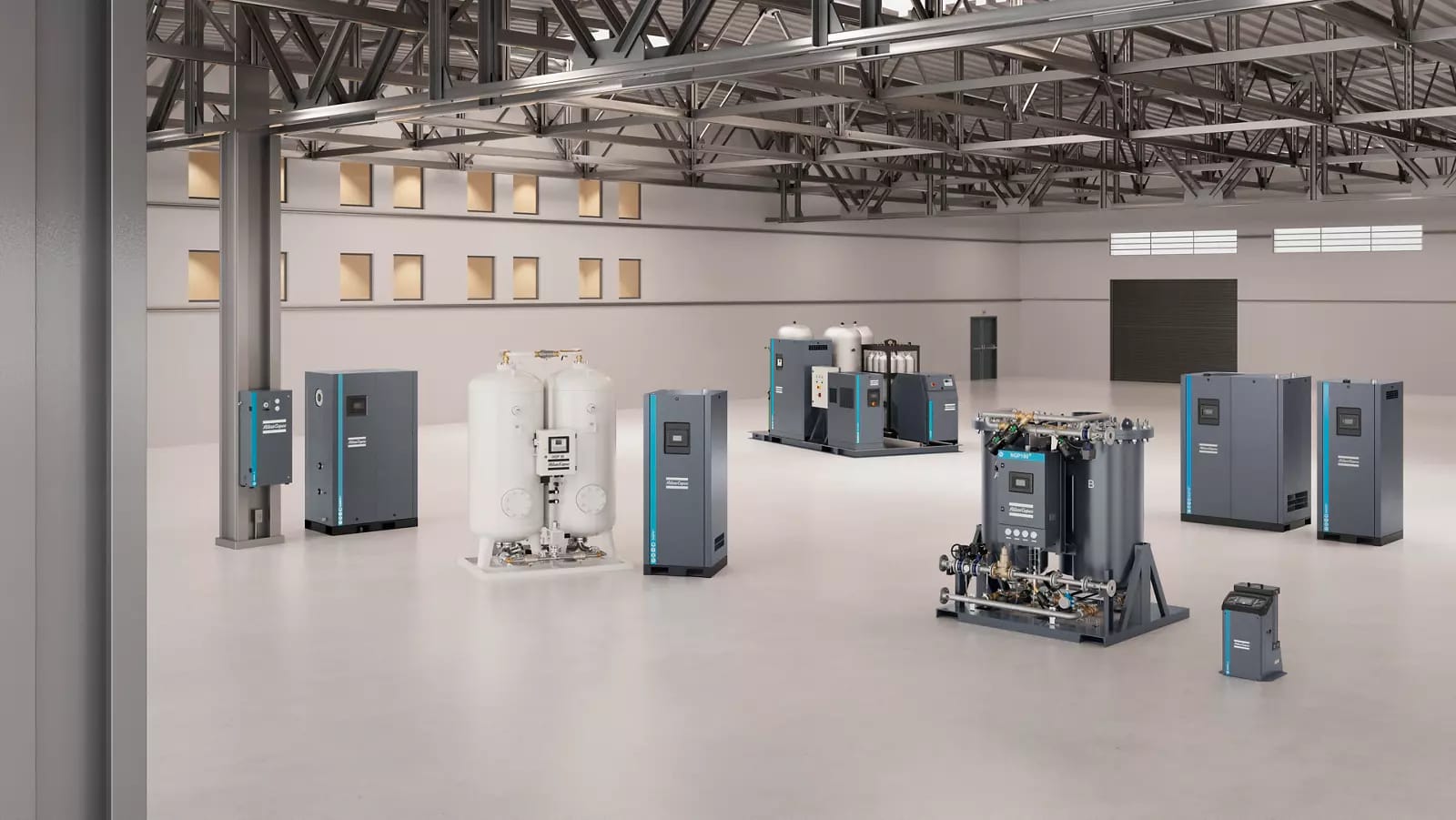
- Z-Series (Oil-Free): Connect multiple units to ER 90–900 cabinets. Generates 90°C water.
- SMARTLINK: Tracks exact energy saved for reporting.
Universal Retrofit Capability
We retrofit heat recovery boxes to mixed fleets.
- Compatible with Kaeser, Ingersoll Rand, CompAir, and HPC.
- Maintains warranty when installed per OEM guidelines.
- Shell-and-tube options available for poor water quality.


Maintenance and Installation Requirements
System integration requires professional engineering.
Thermostatic Control
A Thermostatic Control Valve (TCV) is essential. It regulates oil flow. It ensures the compressor reaches optimal operating temperature. Over-cooled oil (below 60–70°C) causes moisture condensation. This leads to bearing failure. The TCV prevents this.
Water Quality and Limescale
Hard water regions (Yorkshire and East Midlands) cause scaling. Limescale reduces heat transfer efficiency. Use water treatment or cleanable shell-and-tube exchangers.
Routine Inspections
Regular checks ensure ongoing savings.
- Check water inlet and outlet temperatures monthly
- Monitor compressor oil discharge temperatures
- Inspect pump seals and strainer baskets
Sizing and Feasibility
Performance depends on duty cycle and load profile. Accurate sizing requires data. A Compressed Air Energy Audit or #airCHECK models these values. Loggers predict recoverable energy before capital commitment.
Summary: Long-Term Value of Heat Recovery
Heat recovery lowers gas consumption. It reduces carbon emissions. It provides a measurable return within months. Search Air supplies complete system design, installation, and maintenance across Leeds, Sheffield, and Nottingham.
Take the Next Step
Determine your exact savings. Book a Compressed Air Energy Audit or request a free #airCHECK.