

How to Choose the Right Oil for Your Air Compressor
Many compressed air systems in high-pressure industrial environments use oil to lubricate moving parts and reduce wear and tear. By choosing the right compressor oil for your specific equipment, you can extend the lifespan of your system while ensuring smooth operation. However, accidentally or unwittingly using an unsuitable oil might do the opposite, potentially damaging your valuable equipment and increasing energy consumption.
In this guide, we explain the different types of air compressor oil and their practical uses and benefits. We will also discuss some of the most common oil-related mistakes and useful upkeep tips, such as why you should never use standard motor oil.
At Search Air, we have been an industry-leading supplier and installer of innovative compressed air systems for over 75 years, offering everything from air compressor servicing to expert advice on maintenance and performance.
You can feel confident that we know a thing or two about lubricants and keeping machines in pristine condition for a broad range of industries. If you need specific advice based on your unique needs and requirements, do not hesitate to give one of our experts a call.
Understanding Air Compressor Oils
Your air compressor depends on a lot of moving parts that generate heat and friction. A highly specialised lubricant, air compressor oil, is required to lubricate those moving parts and protect your system against wear and tear. In addition to lubrication, the oil circuit in compressor oils perform a range of important tasks:
Heat Absorption
Compressor oil is highly effective at absorbing excess heat produced during the compression process, which helps to protect your system against overheating. This cooling effect is vital for maintaining the longevity of your air compressor.
Anti-Foaming
Most oils contain anti-foaming agents that can assist with air release capability. This removes the foam that develops as large air bubbles rise to the surface of the lubricant, minimising oxidisation.
Sealing and Cleaning
Beyond lubrication, the oil ensures a tight seal between the rotors or pistons, preventing air leakage and maximizing pressure. It also acts as a cleaning agent, suspending contaminants and transporting them to the oil filters for removal.
Demulsification
Oils can contain additives that enhance the efficiency of your compressor’s water separation capabilities, protecting your system from water and oil emulsions.
Viscosity Under Cold Temperatures
Some oils are less effective in cold temperatures, but specialised air compressor oil maintains a stable viscosity even when temperatures drop.
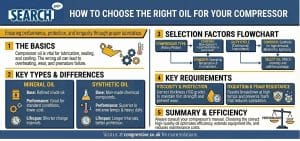
Using the correct compressor oil reduces wear controls heat and extends equipment life
Different Types of Compressor Oils
Knowing the different types of air compressor oil is essential for your compressor’s performance and longevity. The two main oil types are synthetic and mineral (known as ‘natural’ or ‘standard’). Each has distinct benefits depending on your operating conditions.
Synthetic Oils
Synthetic oil is the most suitable type for high-performance compressors in heavy industries, particularly rotary screw air compressors. It can withstand very high temperatures in compressors that operate continuously. Unlike mineral oils, synthetic oil offers less frequent oil changes, minimising maintenance costs and downtime. High-quality synthetic lubricants, such as PAO (Polyalphaolefin) oils, are chemically engineered to provide superior protection and can often run for 8,000 hours before needing a change.
Mineral Oils
Mineral compressor oil, refined from fractions of the base oil derived from crude oil, is a high-value choice for compressors operating in moderate conditions, such as workshops and garages. While it is widely available and easy on the wallet, it requires more frequent oil changes than synthetic alternatives and is less effective in high-pressure environments. This regular oil is typically recommended for light-duty reciprocating air compressors.
Other Compressor Oils
In addition to standard mineral and synthetic oils, there are options such as biodegradable oils for those who need to minimise their carbon footprint in eco-sensitive environments. For specific industries, strictly regulated lubricants are required:
- Food-Grade Oils: These are ideal in industries that need non-toxic lubricants, such as food and beverage processing. You might want to search for an oil that complies with NSF H1 standards to ensure safety if incidental contact with food occurs.

How to Choose the Right Oil for Your Compressor
Factors to Consider When Choosing Oil
The easiest way to determine which oil your compressor needs is to refer to your original equipment manufacturer’s (OEM) user manual. Your compressor manufacturer’s recommendations may specify which oils are compatible to keep your warranty intact. If you have a bespoke system or need further guidance, keep these factors in mind when select the right compressor oil:
Compressor Type
Different types of air compressor are compatible with different oils, and some systems work more efficiently with certain types. For example, you may need a low-viscosity oil for reciprocating compressors and synthetic oils for rotary screw compressors that operate continuously.
Operating Environment
If you work with high temperatures, look for synthetic oils with good thermal stability. Dusty or humid environments demand oils with robust anti-oxidation properties to prevent sludge buildup.
Viscosity Ratings
It is essential to choose an oil with the correct viscosity rating for your system (you should be able to find these details in your user manual but call us if you need assistance). To determine its thickness, you can look for an oil’s SAE and ISO grades, such as ISO VG 46 or VG 68. Using the correct oil type ensures the film thickness is sufficient to separate moving parts.
Maintenance Intervals
It is worth noting that while long-life oil can be more expensive than standard oil to purchase, it often lasts much longer and can reduce operating costs in the long run. Always adhere to the recommended oil change intervals to keep your air compressor running smoothly.
Common Mistakes to Avoid
One of the most critical mistakes is choosing the wrong type of fluid. Do not attempt to save money by using automotive oils. Regular motor oil do not possess the right properties required by an air compressor, such as demulsibility and anti-foaming agents. Using the wrong type of oil can seriously damage your system due to carbon buildup on valves.
Also, remember to check your OEM guidelines whenever possible. Using the wrong oil could void your warranty, and deviating from the recommended specifications can result in inefficiencies.
Last but certainly not least, do not overlook your routine maintenance check. Regularly checking the levels and quality of your oil can reduce the risk of system damage and keep your compressor running efficiently. For critical systems, we recommend regular oil analysis to monitor the health of your lubricant.
Benefits of Using the Right Oil
Just some of the key advantages of using the right oil for your air compressor include:
- Enhanced compressor performance: Using the correct oil minimises friction and heat buildup, ensuring a smooth operation while reducing energy inefficiencies.
- Extended lifespan: The oil properly lubricates your system’s components, reducing the impacts of corrosion, deposits, and wear and tear.
- Minimised downtime and repair costs: High-quality oil reduces the risk of breakdowns by protecting parts under demanding conditions.
- Maintain compliance: Using oils specified by the compressor’s OEM helps ensure your warranty remains intact and your system complies with industry standards.
FAQ
What type of oil for my air compressor?
The recommended oil depends on your specific model. Rotary screw compressors typically use synthetic oils (like PAO) for thermal stability, while reciprocating models often use mineral-based oils. Always check your manual or consult a specialist.
Can I use motor oil in my air compressor?
No. Motor oil contains detergents that cause foaming in compressed air systems, leading to overheating and high oil carryover. Always use a dedicated compressor oil.
How often should I change the oil?
Oil change intervals vary by type. Mineral oils generally last 2,000 to 4,000 hours, while high-performance synthetic oils can last up to 8,000 hours. Harsh operating conditions may require more frequent changes.
Supplying Compressor Oils in Chesterfield, Doncaster, Leeds & Sheffield
If you’re based in Chesterfield, Doncaster, Leeds, or Sheffield, Search Air is your trusted partner for high-performance compressor oils and expert guidance. We supply and support a full range of oils for rotary screw, piston, and bespoke systems across Yorkshire and the Midlands. Whether you need synthetic, mineral, food-grade or biodegradable oil, our team can help you choose the right solution for your specific setup and operating environment. Get in touch today for fast, local support.
Order High-Quality Compressor Oils Today
We have got you covered no matter which type and grade of oil you need to get the most out of your compressor. We have over 80 years of experience at Search Air and are recognised as leaders in our field. For example, we were named Atlas Copco’s Compressor Distributor of the Year in 2022. So, if you need reliable advice and quality products from a team of seasoned experts, you have come to the right place. Call us for more product information and recommendations.