
Services
FasTest Supplier in Leeds, Sheffield, and Nottingham
FasTest connectors for testing, filling and fluid transfer
Through our relationship with Tom Parker, Compressive can source this range for customers across Leeds, Sheffield, Nottingham and the wider Yorkshire and East Midlands region. Where Tom Parker holds an item in stock, next-working-day delivery may be available. We confirm the exact part, price and lead time before you order.
Compressive supplies FasTest manual and automated connectors for industrial testing, filling and fluid transfer applications. Enquiries from Yorkshire and the East Midlands are supported through our Leeds, Sheffield and Nottingham depots.
What types of FasTest connector are available?
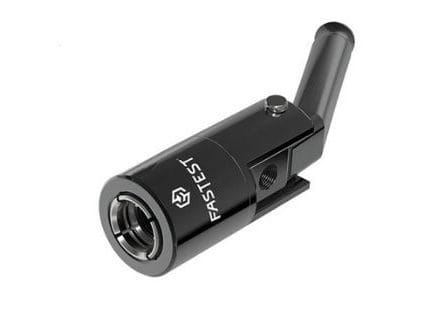
FasTest makes temporary sealing connectors for production testing, pressure testing, evacuation, charging and fluid transfer. The connector grips or seals a port for the duration of the process, then releases so the next component can be connected without repeatedly using a threaded adaptor.
- External-thread connectors grip and seal around a male thread. Manual lever, thumb-valve and pneumatic versions support bench work and automated stations.
- Internal-thread and bore connectors seal inside a female port or smooth bore. The usable sealing surface, internal diameter and insertion depth are as important as the nominal thread description.
- Tube connectors seal onto straight, expanded, flared, beaded or barbed tube ends. The tube outside diameter, end geometry and surface condition determine the seal and gripping arrangement.
- Flange and flat-face connectors provide a temporary seal on larger or non-threaded openings. These applications normally require a drawing that shows the sealing face, available clearance and clamping position.
- HVAC-R processing connectors support evacuation, charging, recovery and proof-testing operations. The refrigerant or process media, port style, required flow and service procedure must all be checked.
- Pneumatically actuated and sensor-enabled connectors can be integrated into automated test equipment. The machine needs to provide the actuation, interlock and control signals required by the selected connector.
Where are FasTest connectors used?
FasTest connectors are used on production lines and test benches for automotive, fluid power, HVAC-R, appliance, aerospace and compressed-gas components. Common tasks include leak testing a casting, pressure testing a hose assembly, evacuating a refrigeration circuit and filling a vessel.
Test pressure alone is not enough to choose a connector. The port geometry, media, temperature, test cycle, connection frequency and available operator access determine whether a manual or automated design is appropriate.
A connector used for pressure-decay leak testing must seal outside the part volume being measured and must not introduce a variable leak path. Seal condition, connector maintenance and repeatable engagement are therefore part of the test process.
What must be checked when selecting a FasTest connector?
The connector must match the port shape and size, test media, pressure or vacuum range, cycle frequency and required actuation method. Seal material and the condition of the test surface can also affect suitability.
Provide a drawing or clear dimensions when the connector is for a non-standard port. For automated test stations, include the available actuation method and the sequence the connector must perform.

FasTest application support in Yorkshire and the East Midlands
Our regional team supports manufacturers, maintenance teams and machine builders in Leeds, Sheffield and Nottingham with part identification, quotation support and technical checks before supply.
Our parts team can check a known FasTest code or review the application details needed to narrow the range. This is useful for maintenance replacements and for engineers specifying a connector for a new test fixture.
Price, availability and lead time are confirmed for the selected configuration.
How to request a FasTest quotation
Review related components through the digital catalogue. Then contact Compressive with the FasTest code or port drawing, media, pressure, actuation method, quantity and delivery postcode.
A useful port drawing shows the thread or bore dimensions, sealing surface, insertion depth and nearby obstructions. Include the test pressure, temperature, connection cycles and whether the operator can reach the port directly.
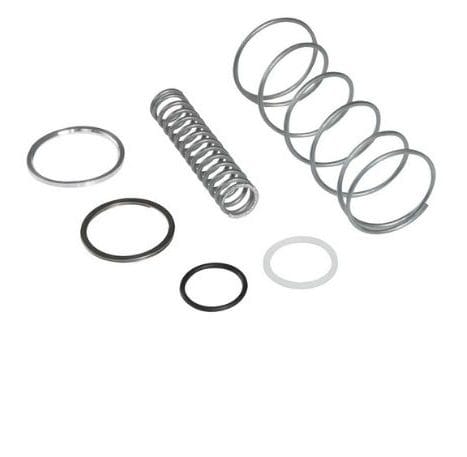
For an automated station, explain how the connector will be mounted and controlled, plus any requirement for seal confirmation or machine interlocking. Replacement seal kits and wear parts should be identified from the exact connector series and size.