
Services
Air Compressors for the Construction Industry
Productivity, Safety, and Compliance
On a busy construction site, having reliable industrial air compressors is more than a convenience; it is a strategic asset. Pneumatic systems deliver reliable power for an extensive range of pneumatic tools and construction equipment, increasing productivity across every phase of a project. More importantly, modern air compressors offer a superior safety profile.
By eliminating electric motors at the point of use, compressed air tools remove the risk of sparks, making them the safer choice in demanding or potentially hazardous industrial environments. Whether you need a portable compressor for a small job or heavy-duty air compressors for construction industry megaprojects, choosing the right setup is essential.
Diesel vs Electric Compressors: Choosing Your Power Source
The choice between the diesel industrial air compressors UK contractors rely on and electric compressors depends on site power, emissions, and noise requirements.

- Stage V Diesel Compressors: The trusted choice for remote locations or projects with exceptionally high pressure and flow requirements. When grid power isn’t available, self-contained means self-sufficient and unrivalled flexibility.
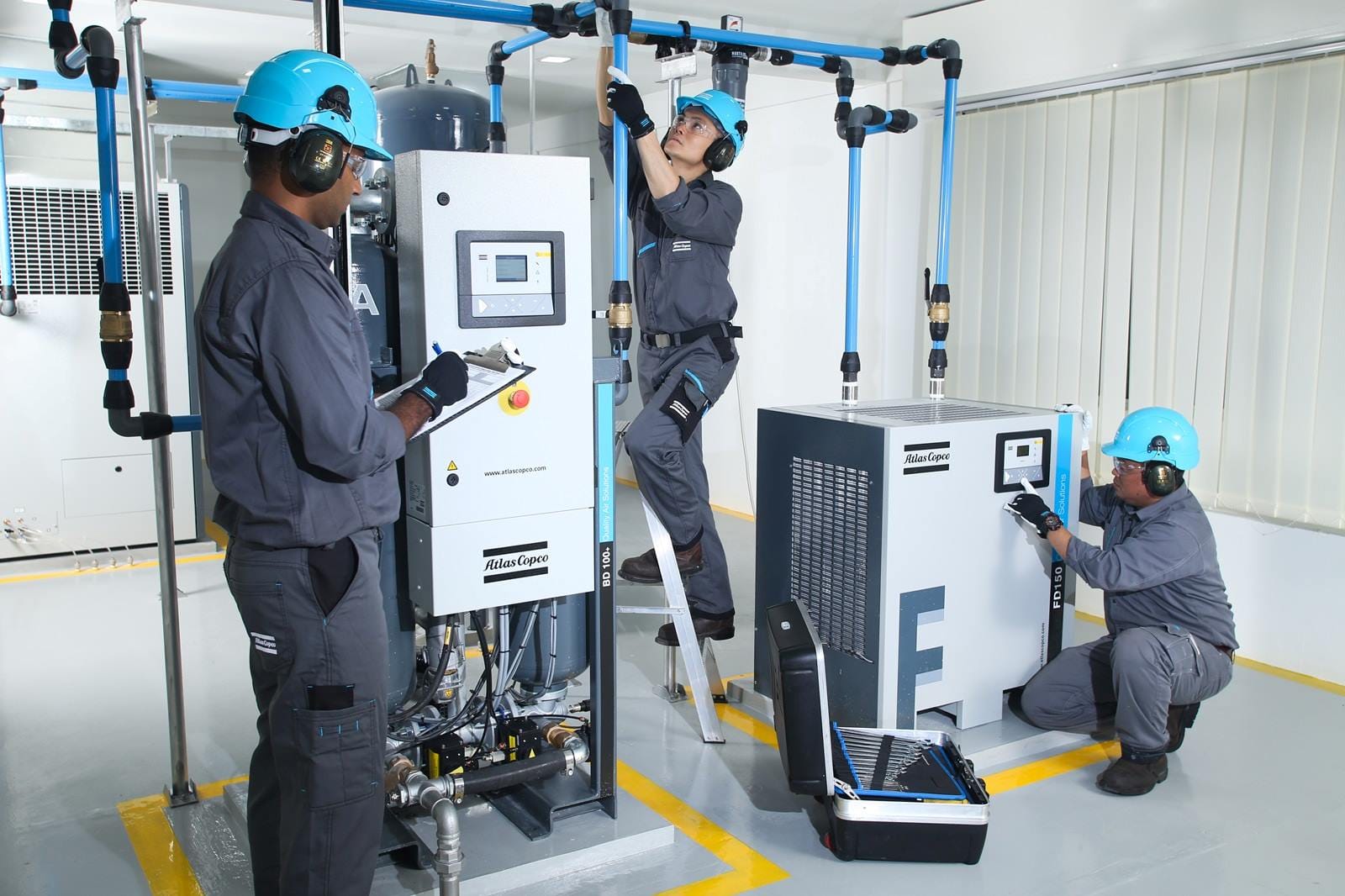
- Electric (E-Air) Compressors: The best choice for in-town projects, low-emission zones, and noise-sensitive areas. E-Air units produce zero on-site exhaust and run very quietly, so you’ll stay good with your community and your air quality regulator.
Equipment: The Right Construction Compressor for Every Application
Selecting the correct types of air compressors and tools is fundamental to site efficiency.
Portable Diesel Screw Compressors (Atlas Copco XAS/XATS/XAVS)
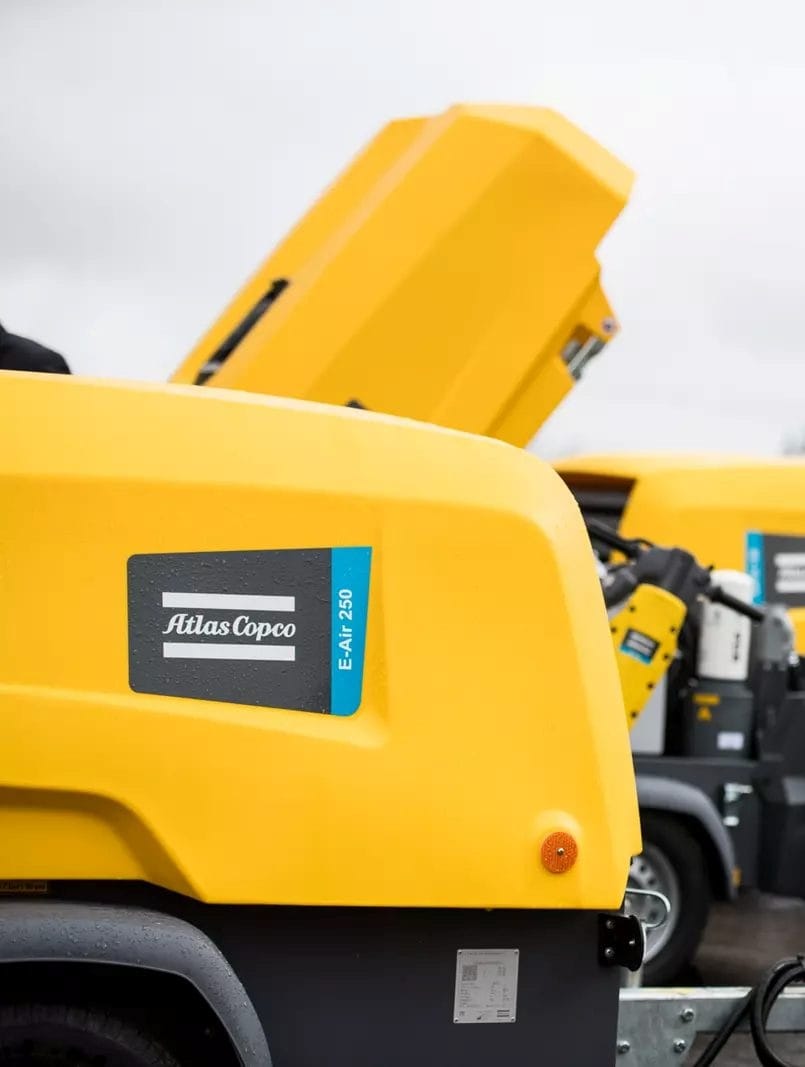
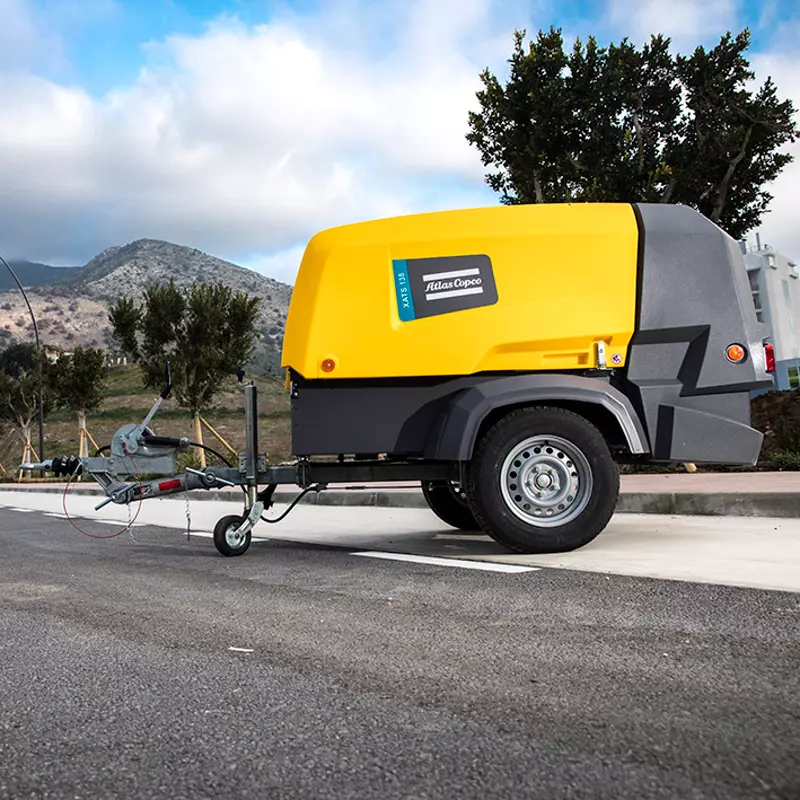
These towable, heavy-duty Stage V portable compressor units are the backbone of site operations.
- PACE Technology: Atlas Copco’s Pressure Adjusted through Cognitive Electronics (PACE) technology lets you set the pressure range your tool needs (e.g., 7-14 bar) and the machine automatically adjusts the flow (CFM).
- HardHat® Canopy: A hood made of corrosion-resistant polyethene shields the compressor from corrosive site conditions. This increases reliability and resale value.
- Built for Toughness: These rotary screw air compressors are designed for 24/7, rugged service.
- Result: One towable covers breakers in the morning and pressure testing in the afternoon.
Urban Compliance: Portable Electric (E-Air) Compressors
When grid or external power is available, E-Air units offer significant advantages.
- Variable Speed Drive (VSD): Adjusts output to match demand, reducing energy consumption compared to fixed-speed models.
- Outcome: Zero on-site exhaust and low noise for night or city-centre works.
Long-Term Reliability: Stationary GA & GA VSD+ Compressors
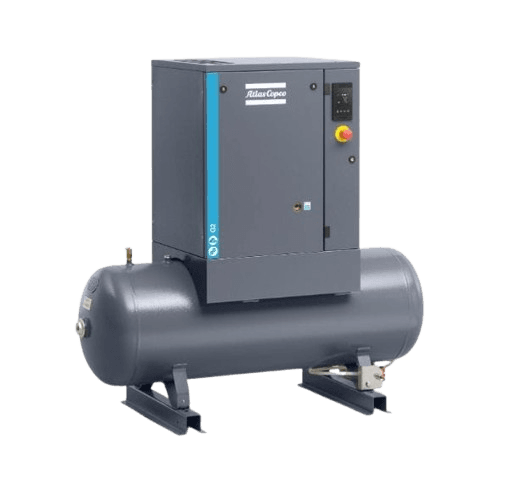
For long-duration projects with established site compounds, prefabrication yards, or batching plants, a stationary system provides reliable, efficient industrial air. These units can be equipped with energy recovery systems and SMARTLINK remote monitoring.
Outcome: Predictable energy profile and proactive uptime via SMARTLINK.

Types of Compressors for Construction Applications
Understanding the different mechanisms helps in selecting the right construction compressor. While rotary screw compressors are common for high-flow construction applications, other types include:
- Reciprocating Compressors: Often used for smaller tasks or workshops, these piston-driven units are cost-effective for intermittent use with lower air demand tools.
- Rotary Screw: The industry standard for continuous, high-pressure duty on a construction site.
System Integrity: Ensuring High-Quality Air & Treatment
Poor compressed air quality can damage pneumatic tools and ruin high-specification finishes. A complete system includes:
- Dryers and Filters: An aftercooler and water separator are essential for most applications. For abrasive blasting or painting, a refrigerated or desiccant dryer is needed to achieve a low dew point and prevent moisture contamination.
- Filtration Systems: These ensure the air meets specific ISO 8573-1 classes for purity, preventing defects in sensitive finishing work.
- Condensate Management: The oily water produced during compression cannot be discharged into the ground or drains. It is a legal requirement to use an oil-water separator to treat this condensate before disposal.
Performance: Sizing Guide for Construction Tools
Choosing the right size air compressor is vital. An undersized unit will stall your tools, while an oversized one wastes fuel. Different tools require specific air flow (CFM) to operate effectively. Our Air Compressor Sizing Guide provides detailed information, but here is a quick reference for common tools:
- Handheld Breakers: Typically require 60–90 CFM per tool.
- Chipping Hammers: Lighter tools needing around 30–40 CFM.
- Rock Drills: Heavy-duty tools often demanding 100–180 CFM depending on size.
- Sandblasting Equipment: High consumption tools, often exceeding 250 CFM for industrial applications.
Note: Use short runs and the correct hose bore; every unnecessary quick-coupler adds pressure drop and slows tools.
Risk Management: Navigating UK Compliance
Compliance is non-negotiable. As a construction site operator, you are legally responsible for the safety of your pressure systems, whether owned or hired. Search Air provides full support to ensure you meet your obligations.

PSSR 2000
Pressure Systems Safety Regulations, which apply to most systems, must have a Written Scheme of Examination (WSE) in place, prepared by a competent person.

PUWER 1998
The Provision and Use of Work Equipment Regulations state that work equipment and tools must be suitable, safe, and well-maintained.

PER & UKCA Marking
Pressure Equipment (Safety) Regulations apply to the sale of equipment in the UK to ensure it is safe and the correct conformity marks are used.

Noise at Work Regulations
We advise on low-noise equipment and hearing protection programmes to keep your site compliant.

BS EN 12021
If compressed air is used for breathing apparatus, it must be tested for quality every three months or whenever a mobile compressor is moved. We can act as your competent person for PSSR, drafting your WSE, scheduling examinations, and keeping reports audit-ready.
-

PSSR 2000
-
PUWER 1998
-
PER & UKCA Marking
-
Noise at Work Regulations
-
BS EN 12021
Uptime Strategy: Maintenance & Troubleshooting
Downtime costs money. A proactive maintenance plan is the most effective way to reduce industrial air compressor maintenance costs. If issues arise, quick diagnosis is key.
| Problem | Likely Cause | Solution |
|---|---|---|
| Tools Underperforming | Pressure drop due to long/undersized hoses or clogged filters. | Use larger bore hoses, minimise connections, and check all filters. |
| Water in Air Lines | Inadequate drying or failed automatic drains. | Add an aftercooler and water separator. Add a dryer for critical tasks. Service drains regularly. |
| High Fuel Consumption | Air leaks, oversized compressor, and poor engine maintenance. | Conduct an ultrasonic leak detection survey. Right-size the unit with PACE. Service air filters and coolers. |

Why Partner with Search Air for Your Construction Project?
For over 75 years, Search Air has been the trusted partner for air compressors for the construction industry in Yorkshire and the East Midlands.
- Unmatched Expertise: As an Atlas Copco Premier Distributor, we have specialist knowledge of the industry’s most reliable equipment. We also service and repair all major brands, including Ingersoll Rand, Kaeser, and CompAir.
- 24/7 Emergency Support: Our local engineers provide a rapid response across the region to minimise downtime and keep your project moving.
- Comprehensive Solutions: We offer turnkey installation, bespoke maintenance plans, and a complete Air Compressor Rental and Hire service, including all necessary tools and air treatment accessories.
- Compliance Partnership: We act as your expert partner, managing your PSSR compliance and breathing air testing to give you complete peace of mind. PACE reduces fleet count; HardHat® protects resale value; SMARTLINK turns unplanned stops into planned maintenance. Our rapid regional response from Leeds, Sheffield, and Nottingham depots means typical attendance is 60–120 minutes in South Yorkshire, and 2–4 hours across West Yorkshire and Nottinghamshire.
FAQs
What are air compressors used for in construction?
Air compressors are the powerhouse of a construction site. They provide kinetic energy to power pneumatic tools like jackhammers, drills, and impact wrenches. They are also used for sandblasting, spraying concrete, and powering ventilation systems in industrial environments.
What size compressor for two 90-lb breakers?
Typically ~7 bar and 150–250 CFM with the correct hose bore.
Diesel or electric for city-centre work?
Electric compressors (E-Air) for zero on-site exhaust and low noise; diesel for remote, high-flow tasks.
How often do you test breathing air?
Every three months, or whenever a mobile compressor is moved (BS EN 12021).
What kind of compressor is the most commonly used in industries?
The rotary screw compressor is the most common in the construction industry due to its ability to provide a continuous flow of air (CFM) at high pressures, unlike reciprocating compressors which are better for intermittent use.
Do you service non-Atlas Copco?
Yes, Ingersoll Rand, Kaeser, Sullair, CompAir, and more.
Get the Right Air Compressor Solution for Your Site
Contact our team today to secure the reliable equipment, tools, and responsive support you need.
Want to know more about our construction service?
Contact us