

Energy Recovery for Air Compressors
Compressed air systems play a vital role in almost all industries. Businesses often rely on air compressors to power tools, equipment, and machinery in manufacturing and industrial settings. However, air compressor systems are prevalent in many environments, from powering HVAC air systems in large commercial buildings to supplying air to medical apparatus in hospitals.
Unfortunately, while a compressor installation system brings a host of benefits and practical uses to countless industries, they are inherently energy-intensive. In fact, up to 94% of the electrical input energy is converted into heat during the compression of air. Without a heat recovery solution, that amount of energy is simply wasted, which can make your air compressor highly inefficient, costly to use, and damaging to the environment, impacting sustainability.
Thankfully, heat recovery solutions manufactured by leading brands like Atlas Copco can achieve Air Compressor Energy Recovery and recover up to 94% of the heat that your compressor would otherwise waste. You can use that recovered heat energy to heat the interior of your workplace or generate hot water. In some cases, energy recovery can account for up to 70% of a company’s heating requirements, resulting in up to 20% overall energy savings. Discover how energy recovery can transform your operational efficiency below.
At Search Air, we have been a leading supplier and installer of compressed air systems and accessories for over 75 years, providing service across Yorkshire, the East Midlands, and surrounding regions. We have proudly been a premier distributor for Atlas Copco since 2001 and were named Atlas Copco Compressors Distributor of the Year in 2022. Below, we will explain everything you need to know about heat recovery systems and how they can benefit your business. If you have specific questions about your unique situation, please call us. We can provide a guide to help you understand the possibilities with Compressor Systems.
Understanding Energy Recovery in Air Compressors
Are Air Compressors Energy Hogs?
Industrial air compressors are notorious energy hogs. Up to 94% of the electricity they consume is lost as heat during compression, a costly waste many businesses can’t afford to ignore. Without an air compressor heat recovery system, this valuable energy is simply lost, increasing operational costs and environmental impact.
Compression heat is generated throughout the process of compression. In oil-lubricated compressors, for example, oil absorbs the heat and passes it through an oil cooler. Similarly, aftercoolers lower the air temperature by releasing more waste heat energy via hot air. Without an energy recovery system, both sources contribute to unnecessary waste energy.
This recovered heat energy can be captured and repurposed using heat recovery solutions. Modern air compressors allow waste heat recovery either via hot air for space heating or through hot water generation using a heat exchanger. In many cases, up to 94% of the available energy is always recovered and reused. For oil-free compressors like the Atlas Copco ZR/ZT series, high-grade heat recovery can even produce hot water up to 90°C. This can be a win-win solution for many businesses.
The quantity of recovered energy will vary depending on factors such as compressor design, whether the compressor has a variable load, and whether there is a stable heat energy demand within the facility. For businesses with consistent requirements, the investment for energy recovery for air compressors can often pay back within two to three years.
By implementing energy recovery, companies can significantly reduce energy consumption, cut CO2 emissions, and better use the heat already produced, without disrupting day-to-day operations.
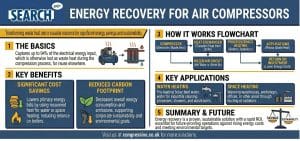
Most of the energy used by an air compressor becomes heat that can be recovered and reused
What Types of Heat Recovery Systems Are Available?
There are many ways in which recovered heat from an air compressor can be repurposed to prevent unnecessary waste and environmental damage. The main types of energy recovery systems involve hot air utilisation and hot water generation.
How Can Hot Air Be Utilised for Heat Recovery?
In many workplaces, the most cost-effective and straightforward heat recovery system is hot air utilisation, which essentially allows you to redirect the recaptured hot air into arenas requiring Cooling or heating. Instead of allowing your system’s aftercooler to expel the hot air into the atmosphere, we can install ducting the air that channels the hot air to specific areas of your workplace or industrial facility. This is particularly effective for air-cooled compressors where the ambient air is heated by the compressor unit. In some cases, this redirected hot air can account for well over 50% of a business’s overall heating needs.
What is Hot Water Generation?
Hot water generation is a more advanced form of heat recovery. While these solutions can be more expensive to purchase and install than hot air utilisation systems, they are often more versatile and beneficial in the long run in industrial settings. These hot water generation systems work through plate heat exchangers installed in your compressor’s cooling unit.
The heat from the oil or cooling water system, which has absorbed energy from the compression process, is transferred to clean water via the heat exchanger. Depending on the system design and compressor type, the resulting hot water can reach temperatures up to 90°C. This is ideal for boiler feed water, industrial washing, or central heating.
- Hot water generation systems boast a wide range of commercial and industrial uses, including:
- Cleaning and sanitation
- Process heating
- Central heating
- Boiler feed water
- Industrial washers and equipment

Energy Recovery for Air Compressors
What Are the Benefits of Implementing Heat Recovery Systems?
Introducing an energy recovery system into your compressed air installation can bring a range of advantages, delivering both immediate and long-term value across financial, operational, and environmental fronts. The benefits of energy recovery extend far beyond simple cost-cutting.
How Can Heat Recovery Lead to Cost Savings?
Using heat recovery significantly reduces the need for separate heating sources. By capturing waste heat from air, you can provide hot air for space heating or generate hot water for cleaning, process operations, or central heating. This recovered heat energy can account for up to 70% of your facility’s heating requirements, cutting overall energy consumption by as much as 15–20%. In most cases, businesses see a return on investment for energy recovery within two to three years, making it a low-risk, high-value upgrade.
How Does Heat Recovery Minimise Environmental Impact?
Heat recovery systems play a vital role in reducing energy consumption and lowering carbon emissions. Instead of relying solely on fossil fuels or external energy supplies, businesses can use energy recovery from compressed air to supplement energy needs sustainably. This helps companies meet stricter environmental regulations (such as ISO 50001 and SECR), improve sustainability reporting, and contribute towards corporate net-zero goals, while also reducing vulnerability to rising energy costs.
How Does Heat Recovery Improve Operational Efficiency?
Recovering heat from your compressed air production improves overall system stability. Heat recovery systems help maintain optimum operating temperatures by removing excess heat from compressors, reducing the risk of overheating and the wear and tear associated with temperature fluctuations. Equipment that operates within a stable temperature range typically lasts longer, offers better performance, and requires less maintenance, all of which translates to cost savings further and reduced downtime.
How Does Heat Recovery Enhance Workplace Comfort and Versatility?
Compressed air energy can be used flexibly across your site. Whether you need hot air for space heating, hot water for process applications, or a combination of both, modern energy recovery systems capture waste heat to provide a practical and adaptable solution. Some systems even allow for automatic switching between heating modes, maximising the use of available energy all year round.
How Does Heat Recovery Strengthen Business Resilience?
Integrating waste heat recovery into your compressed air system makes your business less dependent on external energy supplies. In industries where compressed air energy costs are volatile, using heat recovery offers greater control over operational costs and shields businesses from sudden market changes, supporting long-term resilience.
What About the UK Business Case and Financial Incentives?
Beyond the immediate operational savings, investing in energy recovery for air compressors is supported by significant UK government incentives designed to accelerate industrial decarbonisation.
Current schemes like “Full Expensing” allow UK companies to claim 100% capital allowances on qualifying plant and machinery investments. This means you can deduct the full cost of your new compressor and heat recovery equipment from your profits before tax in the year of purchase. Additionally, for energy-intensive industries, the Industrial Energy Transformation Fund may provide grants to support the deployment of energy efficiency technologies.
With UK industrial electricity prices remaining high, the ROI on a heat recovery system has never been faster. A typical 75 kW compressor operating 6,000 hours annually could yield thousands in savings by offsetting gas usage for heating water. The opportunity to save money is significant.
How Can I Calculate the Recovery Potential?
Calculating the recovery potential of your air compressor system involves assessing several factors, including compressor size, operating hours, and the temperature of the compressed air. Contact Search Air for a comprehensive AIRScan energy audit to accurately determine your potential savings.
What Are the Different Compressor Types and Heat Recovery Suitability?
Not all air compressors are created equal when it comes to heat recovery. Rotary screw compressors are generally the most suitable due to their continuous operation and high heat output. Piston compressors, while common, produce less consistent heat. Centrifugal compressors, often used in large-scale industrial applications, can also be effective for heat recovery. Contact Search Air to determine the best compressor type for your specific heat recovery needs.
How Can Heat Recovery Systems Integrate with Existing HVAC Systems?
Integrating heat recovery systems with existing HVAC systems can significantly boost energy efficiency. The recovered heat can be used to preheat air entering the HVAC system, reducing the load on boilers or chillers. This integration requires careful planning and may involve modifications to your existing HVAC infrastructure. Search Air’s expert engineers can assess your current systems and design a seamless integration plan.
What Are the Potential Challenges and Limitations of Heat Recovery?
While heat recovery offers numerous benefits, it’s important to acknowledge potential challenges. Seasonal variations in heating demand can affect the efficiency of heat recovery systems. Additionally, specialised expertise is required to install and maintain these systems. At Search Air, we provide comprehensive support to address these challenges and ensure optimal performance of your heat recovery system.
Learn More about Heat Recovery Systems for Air Compressors
As you can tell from the above, heat recovery solutions have the potential to bring a range of significant benefits to your business. In fact, our systems contribute much more than just individual business benefits, they could save 1.99% of the total industrial electricity consumption in the UK. This can also reduce your footprint.
If you want to know exactly how an Atlas Copco system can help your business, do not hesitate to call us. We are an award-winning supplier and installer of advanced solutions with over 75 years of experience. You can feel confident that you are in safe hands when you trust Search Air.
FAQs
What is an air compressor heat recovery system?
An air compressor heat recovery system is a technology that captures the heat generated by your air compressor during operation. Since up to 94% of the electrical energy is converted into heat, recovery systems capture waste heat and repurpose it for practical uses like space heating or hot water production. Without a recovery system in place, this valuable energy would otherwise be wasted.
How does using heat recovery benefit my business?
Using heat recovery helps reduce energy bills, lower carbon emissions, and improve energy efficiency. By implementing energy recovery from your compressed air air installation, you can supplement your heating system heating needs, cut reliance on external energy sources, and extend the lifespan of your equipment. The recovery potential is significant, often offering a payback period of under two years.
Can a heat recovery system be added to existing compressors?
Yes, a modern energy recovery system can often be integrated into an existing compressed air installation. Whether you are using oil-injected rotary screw compressors or oil-free compressors, there are recovery options to recover waste heat via hot air or hot water. Retrofitting is possible for many brands, but Atlas Copco’s Energy Recovery modules are designed for seamless integration, helping to reduce energy consumption without major disruption to your operations.
What temperature water can I generate?
Depending on your compressor type, energy can be recovered to heat water significantly. Oil-injected compressors typically produce water up to 70–80°C, while oil-free compressors (like the Atlas Copco ZR/ZT series) can generate high-grade heat with water temperatures up to 90°C, suitable for boiler feed or industrial processes.
How do energy recovery systems work in modern compressors?
Modern energy recovery systems work by capturing the waste heat generated during the compression process. This heat is typically transferred to water or air via a heat exchanger, which can then be used for space heating, hot water production, or other industrial processes. The efficiency of these systems depends on factors such as compressor type, operating conditions, and the design of the heat recovery system.
The turn to sustainability is important for many businesses.